ReZlect
ReZlect
ReZlect
Conceptual UX/UI project
Conceptual UX/UI project
Conceptual UX/UI project
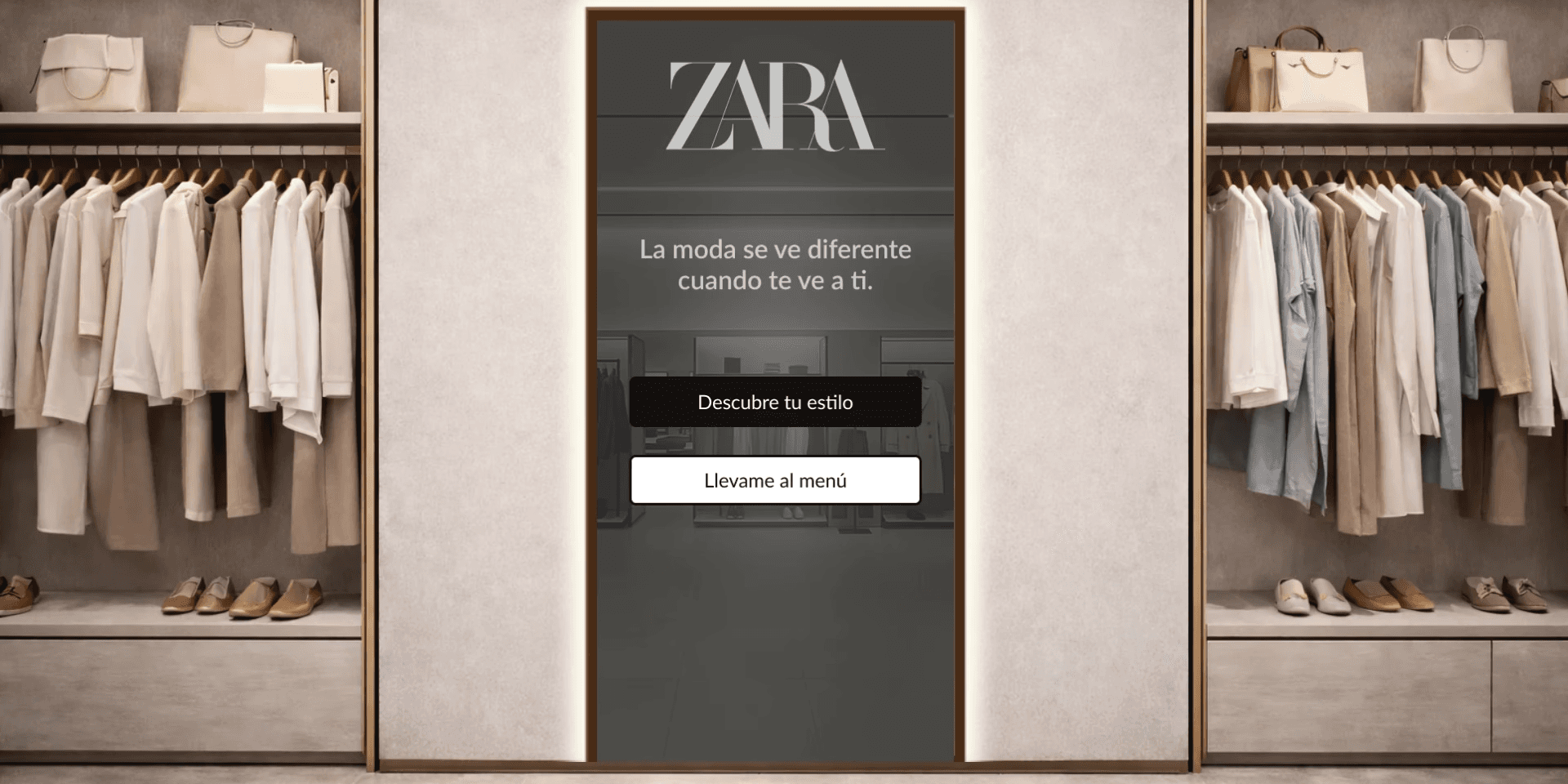
A smart mirror concept developed as part of an academic course, using the Zara clothing brand as case study. ReZlect enhances the in-store fitting room experience through augmented reality and personalization. It allows customers to visualize outfits, explore variations, and make faster, more confident purchase decisions.
A smart mirror concept developed as part of an academic course, using the Zara clothing brand as case study. ReZlect enhances the in-store fitting room experience through augmented reality and personalization. It allows customers to visualize outfits, explore variations, and make faster, more confident purchase decisions.
A smart mirror concept developed as part of an academic course, using the Zara clothing brand as case study. ReZlect enhances the in-store fitting room experience through augmented reality and personalization. It allows customers to visualize outfits, explore variations, and make faster, more confident purchase decisions.
My Role
UX and UI Design, User Research, Prototyping
My Role
UX and UI Design, User Research, Prototyping
My Role
UX and UI Design, User Research, Prototyping
Team
- Emiliano Rodriguez
- Maximiliano Victorino
- Brenda Ruedas
Team
- Emiliano Rodriguez
- Maximiliano Victorino
- Brenda Ruedas
Team
- Emiliano Rodriguez
- Maximiliano Victorino
- Brenda Ruedas
Timeline
September - November 2025
(8 weeks) | Course project
Timeline
September - November 2025
(8 weeks) | Course project
Timeline
September - November 2025
(8 weeks) | Course project
Tools
Figma, Miro, SketchUp, ChatGPT
Tools
Figma, Miro, SketchUp, ChatGPT
Tools
Figma, Miro, SketchUp, ChatGPT
PROBLEM STATEMENT
PROBLEM STATEMENT
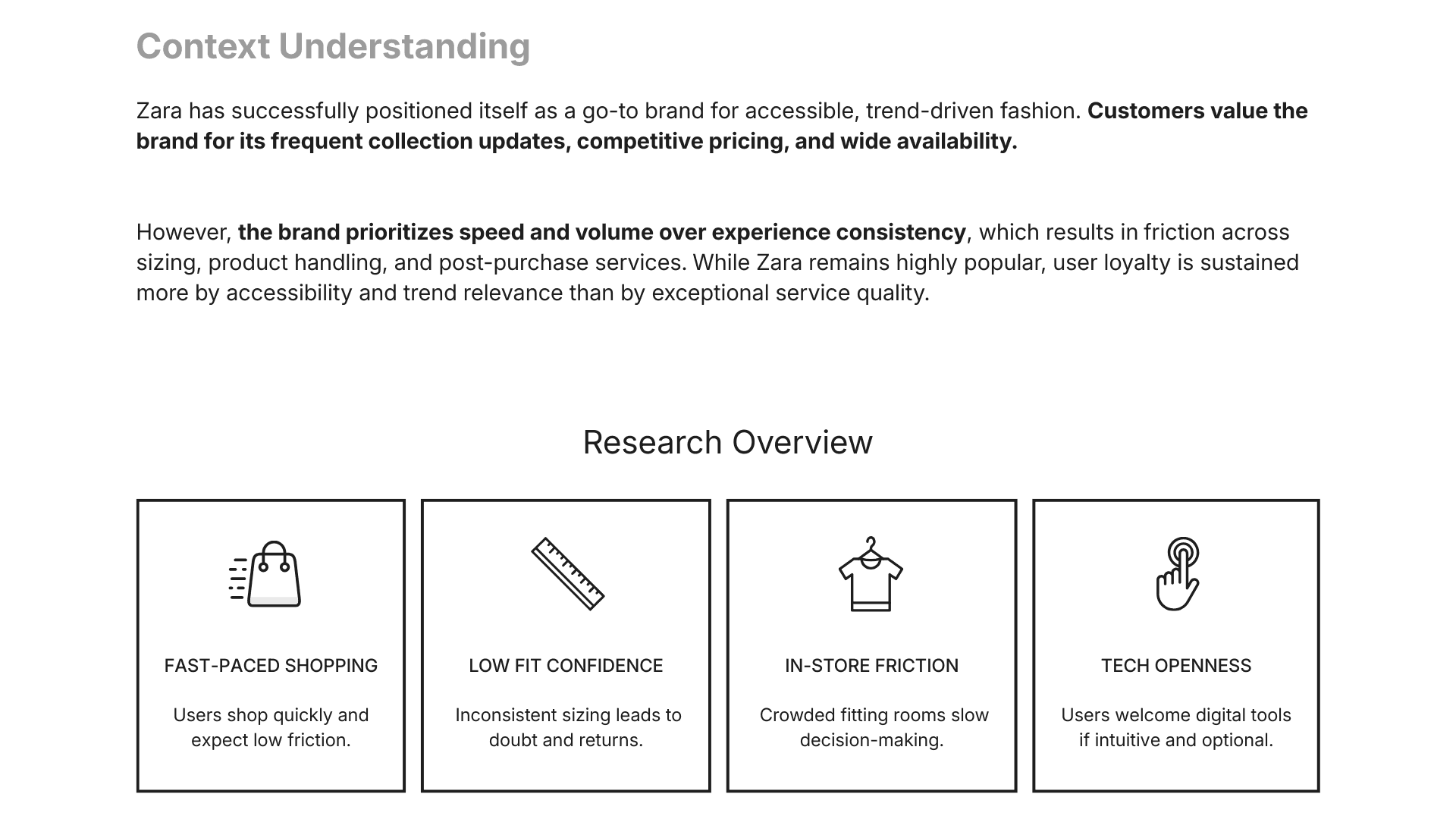
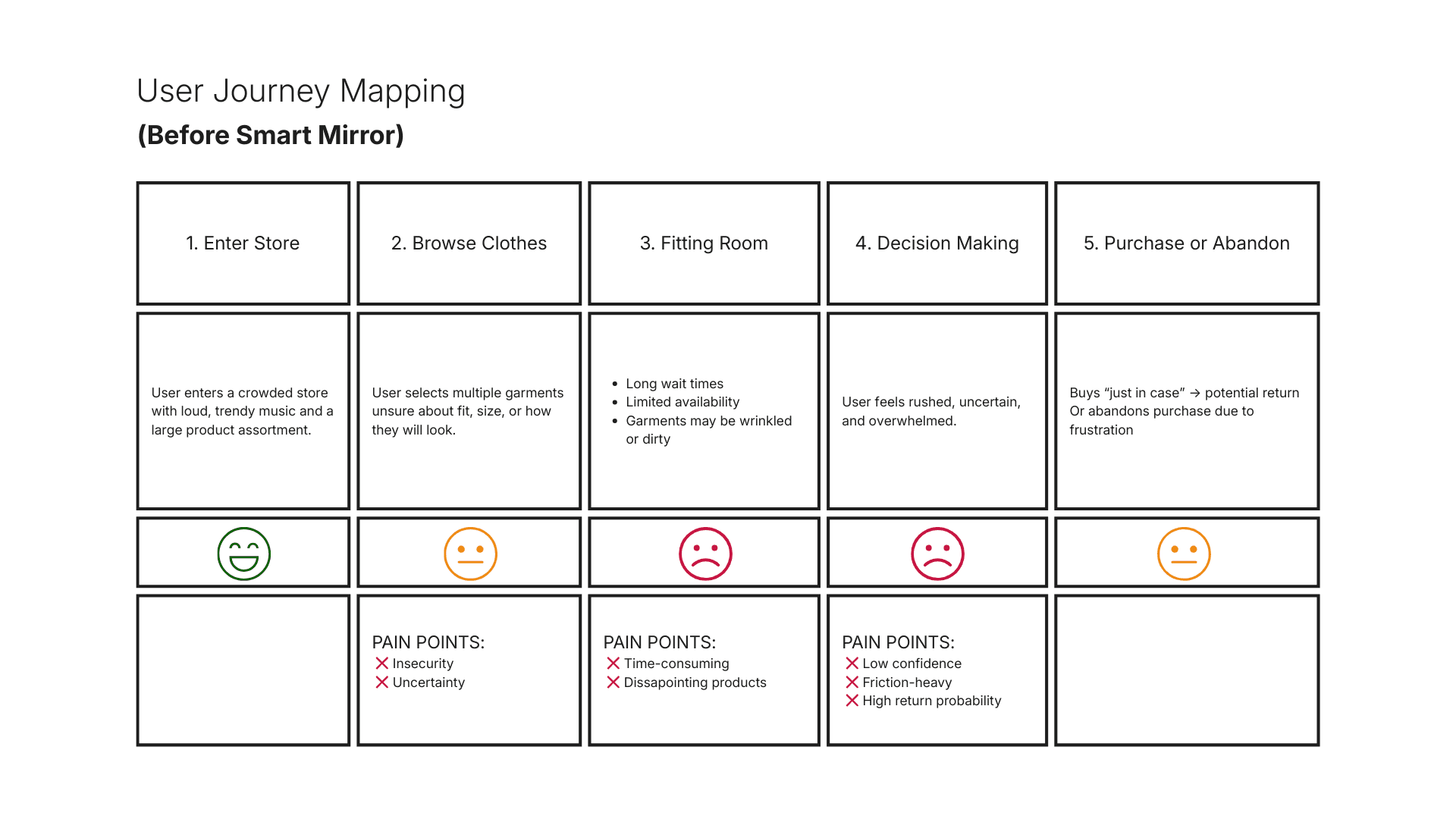
Zara customers enjoy trendy, accessible fashion, but often struggle to make confident purchase decisions in-store due to inconsistent sizing, crowded fitting rooms, poor garment handling, and a fragmented digital experience. These frictions lead to frustration, inefficient shopping journeys, and an increased number of returns, creating a gap between Zara’s innovative brand promise and the actual user experience.
Zara customers enjoy trendy, accessible fashion, but often struggle to make confident purchase decisions in-store due to inconsistent sizing, crowded fitting rooms, poor garment handling, and a fragmented digital experience. These frictions lead to frustration, inefficient shopping journeys, and an increased number of returns, creating a gap between Zara’s innovative brand promise and the actual user experience.
Zara customers enjoy trendy, accessible fashion, but often struggle to make confident purchase decisions in-store due to inconsistent sizing, crowded fitting rooms, poor garment handling, and a fragmented digital experience. These frictions lead to frustration, inefficient shopping journeys, and an increased number of returns, creating a gap between Zara’s innovative brand promise and the actual user experience.
SOLUTION
SOLUTION
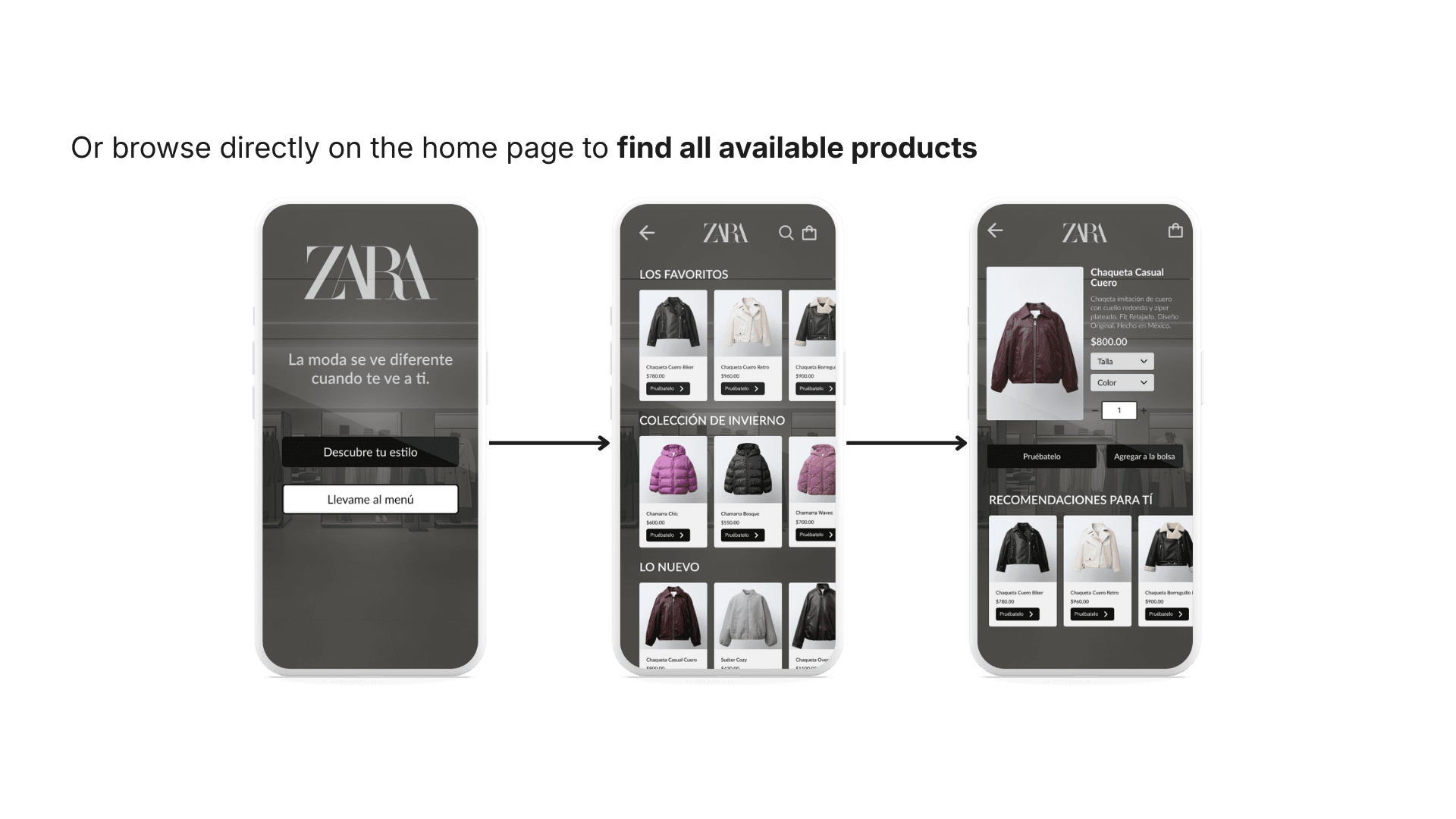
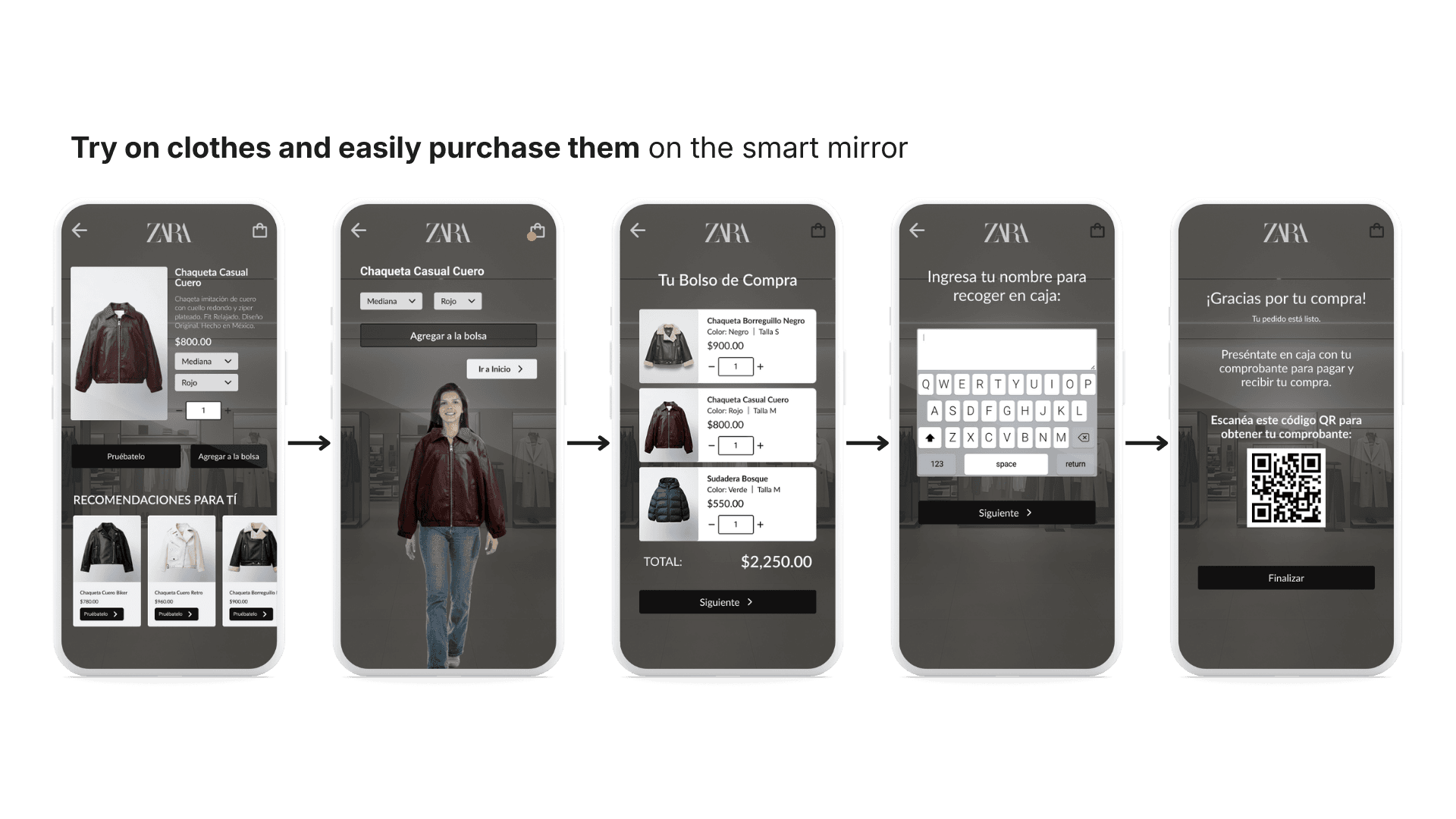
ReZlect introduces an augmented reality–powered smart mirror that transforms the fitting room into a guided and personalized experience. By allowing users to visualize garments in different sizes, colors, and styles, receive tailored recommendations, and create outfits digitally, the solution reduces decision-making time while maintaining Zara’s minimalist in-store aesthetic. This seamless blend of physical and digital touchpoints enhances efficiency, confidence, and overall satisfaction.
ReZlect introduces an augmented reality–powered smart mirror that transforms the fitting room into a guided and personalized experience. By allowing users to visualize garments in different sizes, colors, and styles, receive tailored recommendations, and create outfits digitally, the solution reduces decision-making time while maintaining Zara’s minimalist in-store aesthetic. This seamless blend of physical and digital touchpoints enhances efficiency, confidence, and overall satisfaction.
ReZlect introduces an augmented reality–powered smart mirror that transforms the fitting room into a guided and personalized experience. By allowing users to visualize garments in different sizes, colors, and styles, receive tailored recommendations, and create outfits digitally, the solution reduces decision-making time while maintaining Zara’s minimalist in-store aesthetic. This seamless blend of physical and digital touchpoints enhances efficiency, confidence, and overall satisfaction.
PROJECT OBJECTIVES
PROJECT OBJECTIVES
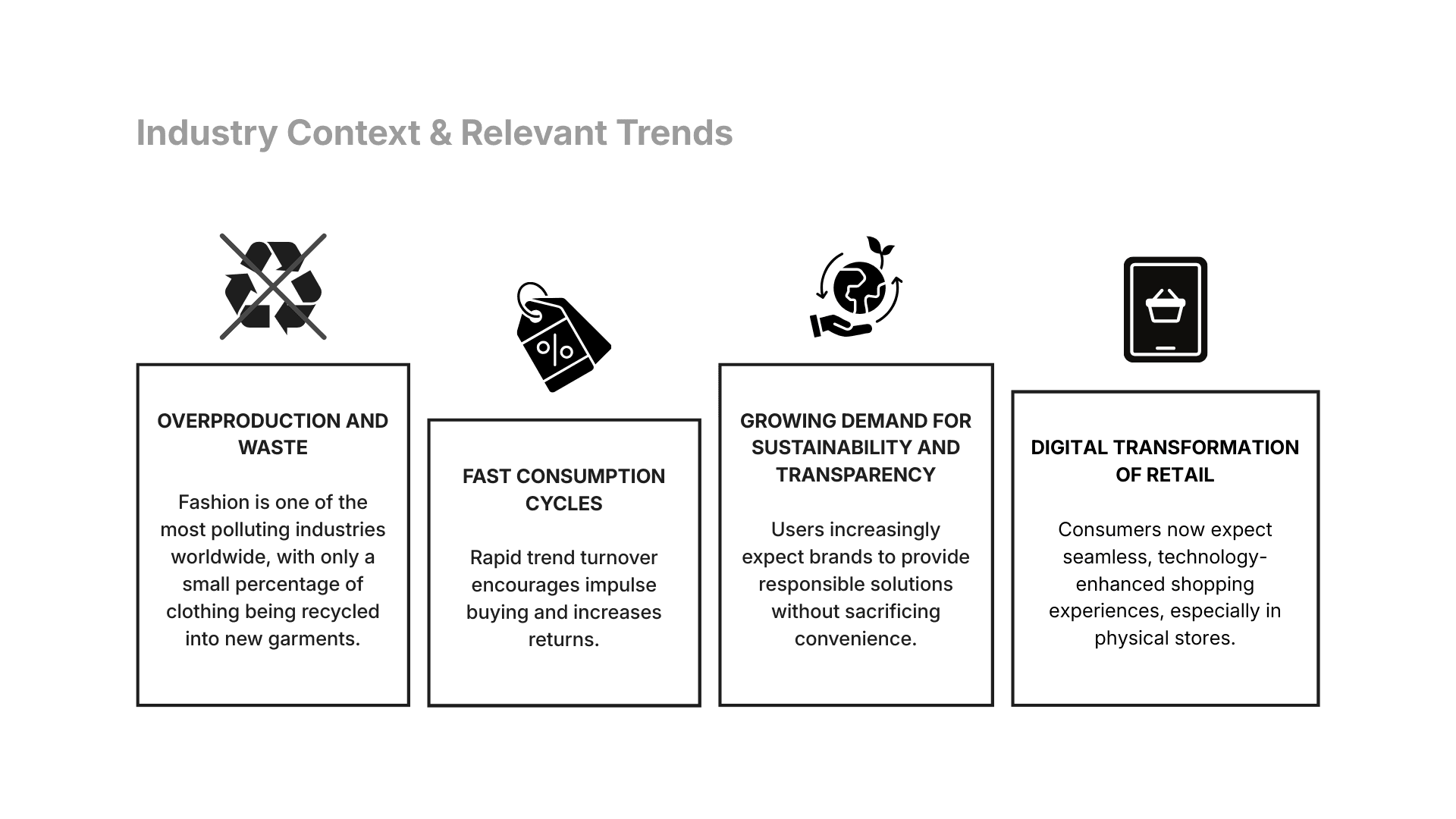
Enhance the in-store shopping experience by introducing a smart mirror that seamlessly blends digital interaction with the physical retail environment.
Help customers discover Zara products more efficiently through personalized recommendations based on individual preferences, body type, and style needs.
Collect valuable user behavior insights (in an ethical and privacy-conscious manner) to improve product recommendations, inventory planning, and future customer experiences.
Contribute to sustainability efforts by reducing unnecessary garment handling, overproduction, and product returns.
Increase customer engagement and dwell time in-store by offering an interactive, innovative, and intuitive digital touchpoint.
USER PERSONAS
USER PERSONAS
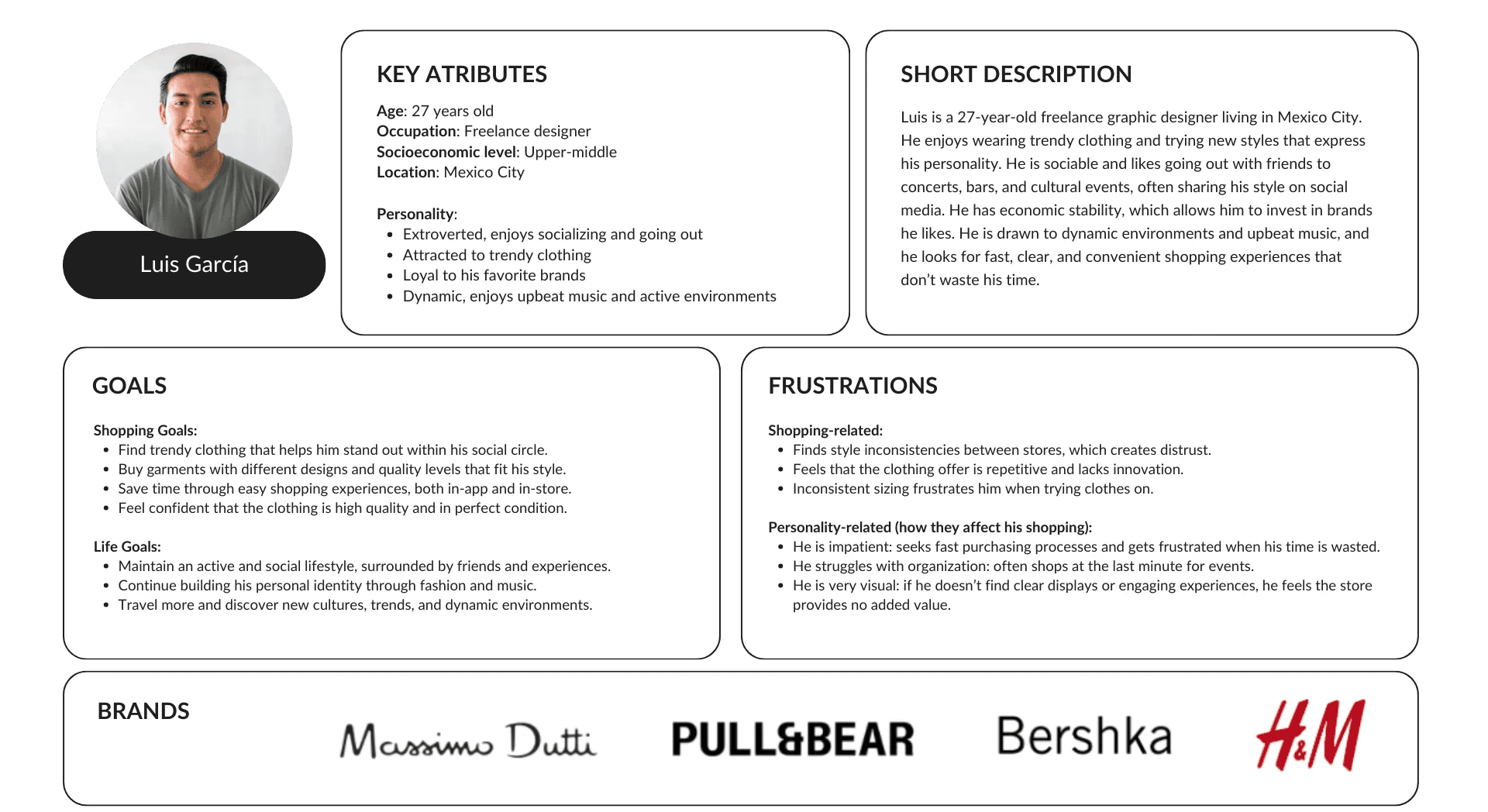
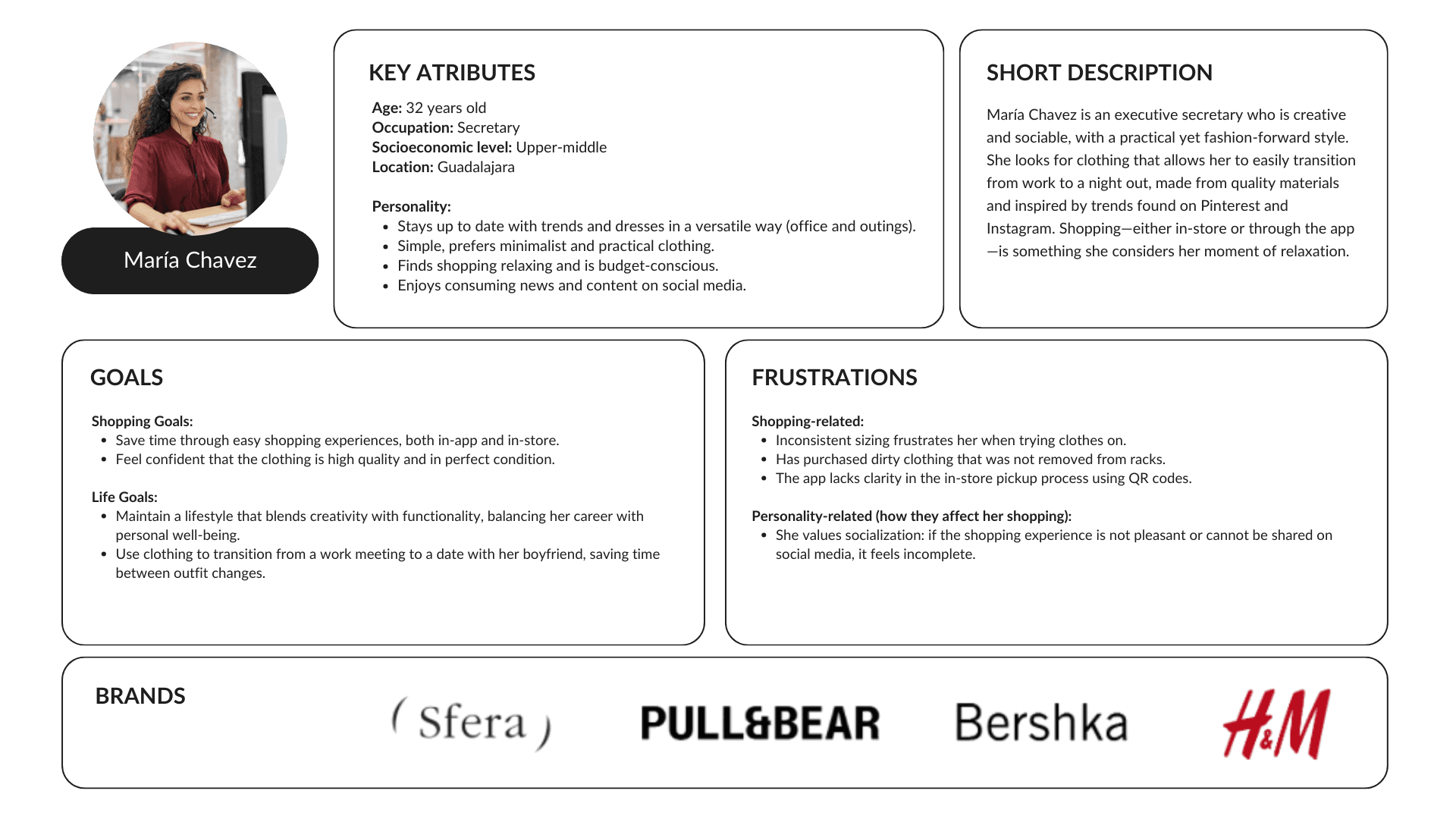
USER JOURNEY MAPS
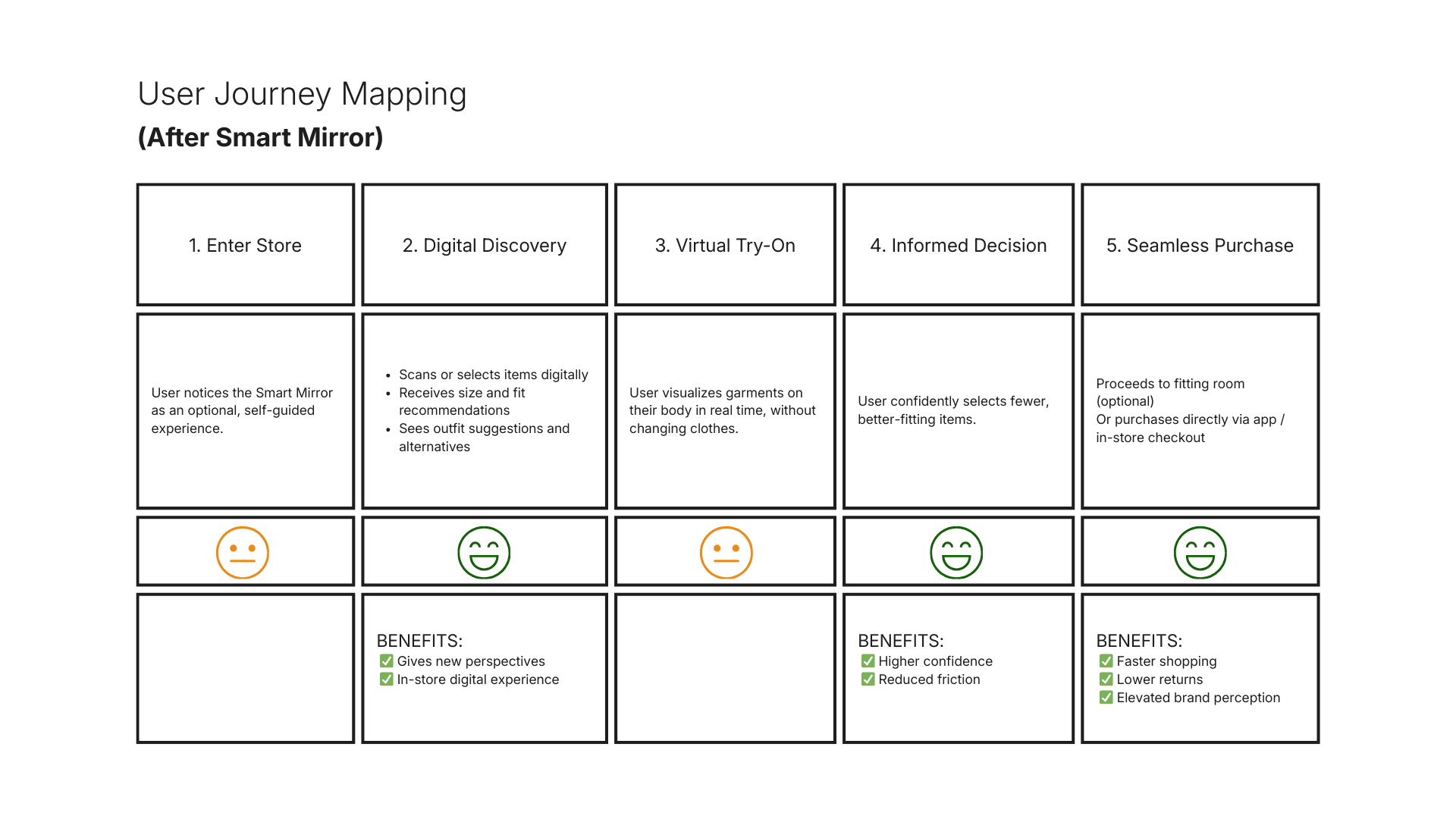
in-store experience design
in-store experience design
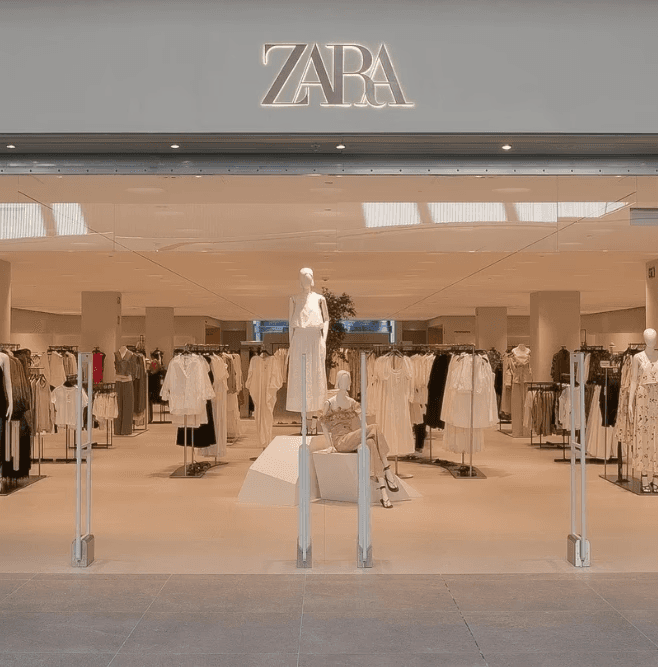
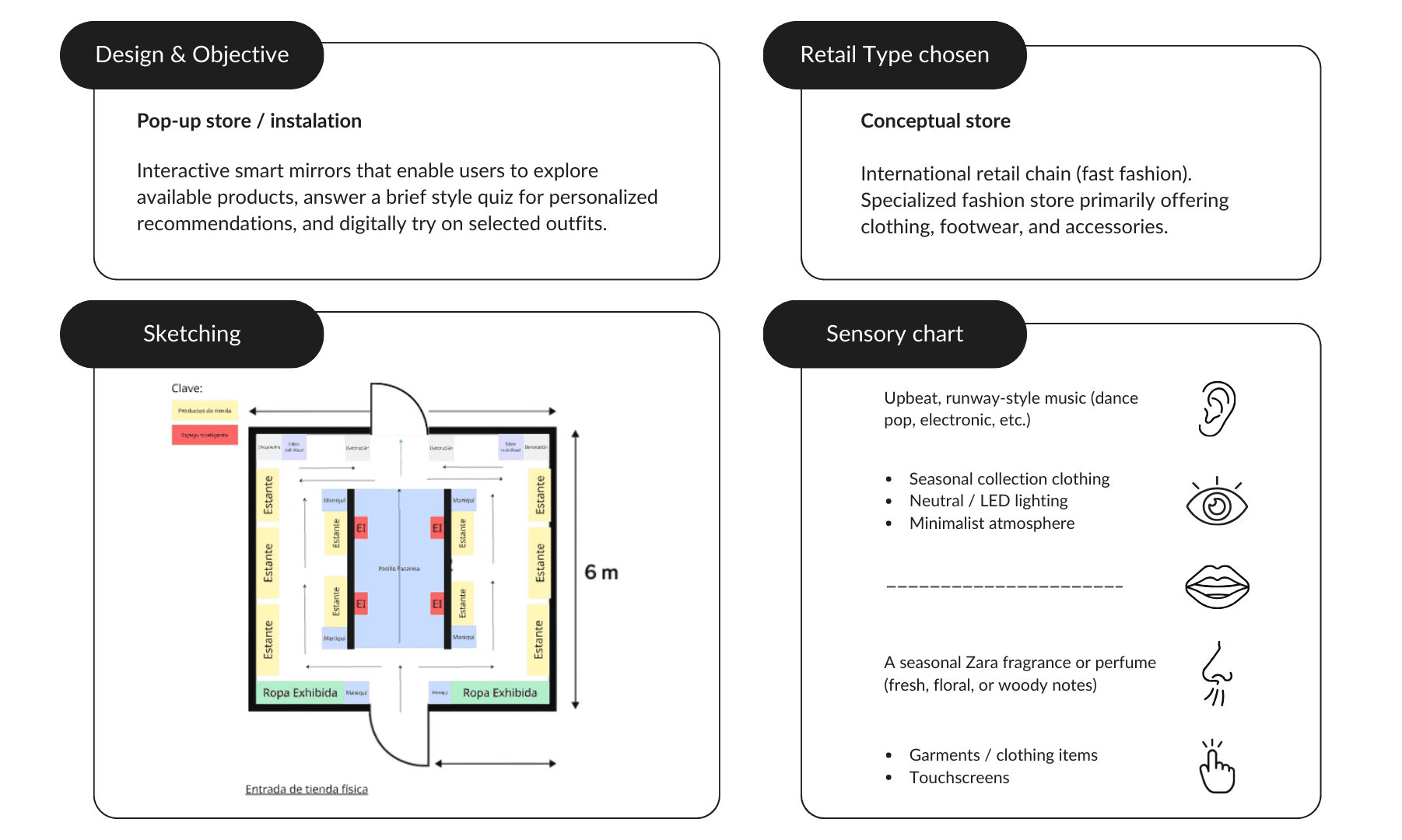
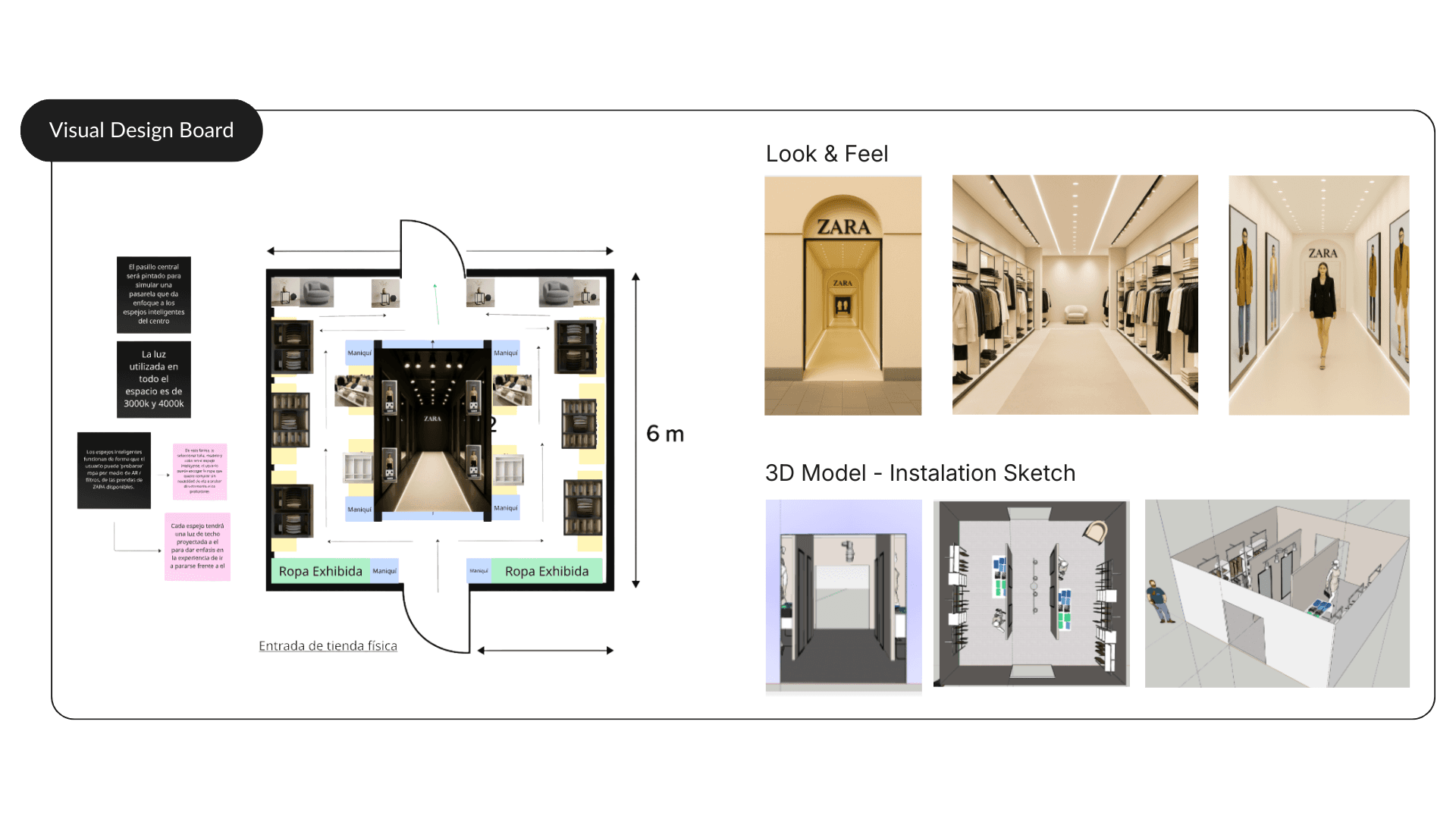
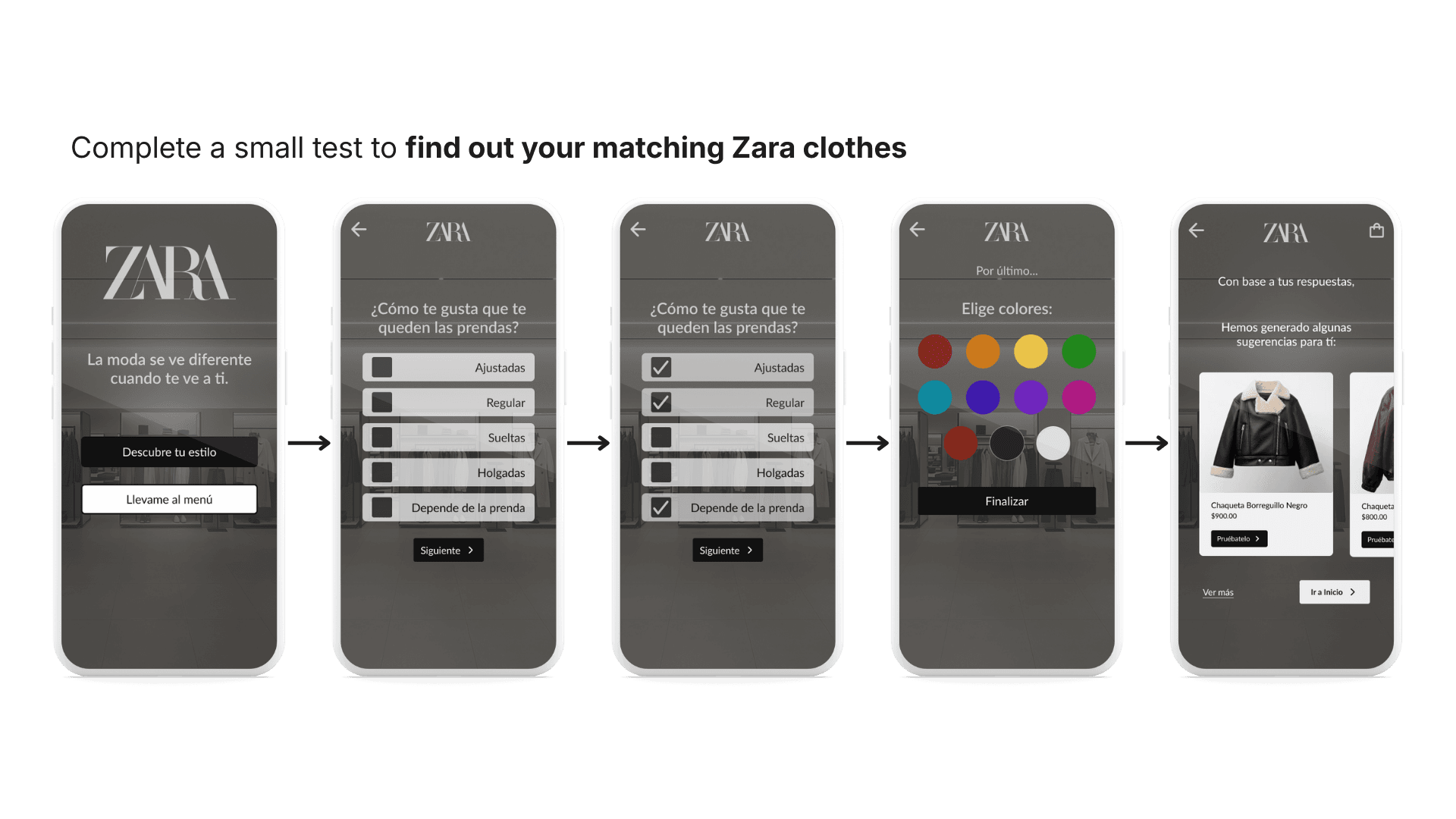
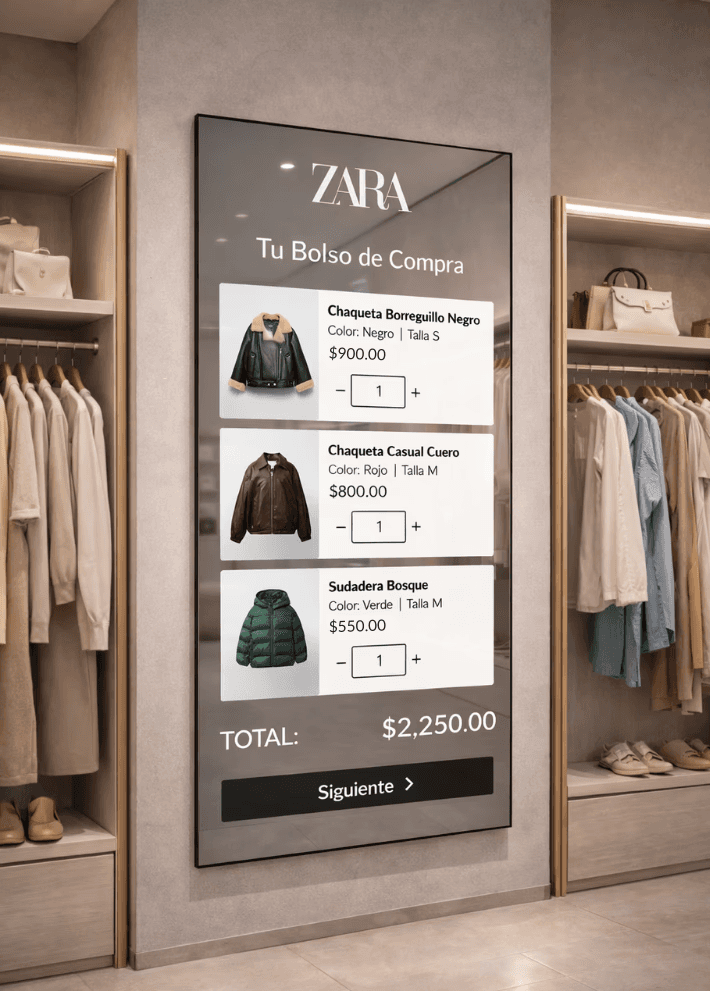
For this project proposal, we made a physical retail experience designed as a conceptual pop-up or temporary installation within the Zara fast-fashion retail context. Inside the store, interactive smart mirrors invite users to answer a short set of questions about their fashion preferences in order to receive personalized suggestions.
The spatial layout is organized like a runway-inspired pathway, surrounded by shelving, mannequins, and displayed seasonal clothing, encouraging fluid circulation and exploration. The experience is supported by a preliminary sensory map: upbeat, runway-style music (dance pop or electronic), neutral LED lighting with a minimalist atmosphere, Zara’s seasonal fragrance, and tactile interaction through garments and touchscreens. Overall, the concept aims to create an immersive, efficient, and visually engaging shopping experience that blends fashion, technology, and sensory stimulation.
For this project proposal, we made a physical retail experience designed as a conceptual pop-up or temporary installation within the Zara fast-fashion retail context. Inside the store, interactive smart mirrors invite users to answer a short set of questions about their fashion preferences in order to receive personalized suggestions.
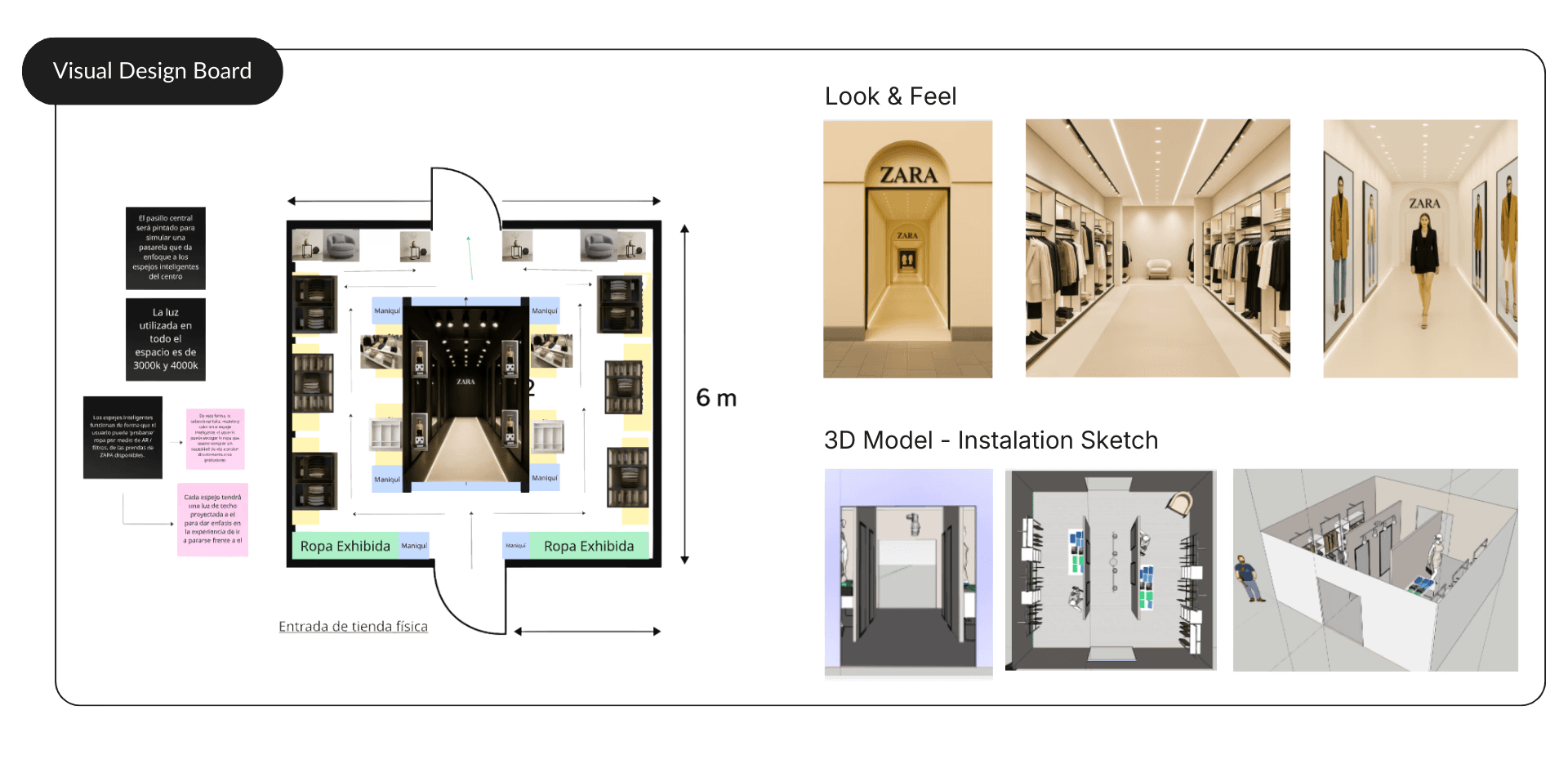
The spatial layout is organized like a runway-inspired pathway, surrounded by shelving, mannequins, and displayed seasonal clothing, encouraging fluid circulation and exploration.
Overall, the concept aims to create an immersive, efficient, and visually engaging shopping experience that blends fashion, technology, and sensory stimulation.
For this project proposal, we made a physical retail experience designed as a conceptual pop-up or temporary installation within the Zara fast-fashion retail context. Inside the store, interactive smart mirrors invite users to answer a short set of questions about their fashion preferences in order to receive personalized suggestions.
The spatial layout is organized like a runway-inspired pathway, surrounded by shelving, mannequins, and displayed seasonal clothing, encouraging fluid circulation and exploration. The experience is supported by a preliminary sensory map: upbeat, runway-style music (dance pop or electronic), neutral LED lighting with a minimalist atmosphere, Zara’s seasonal fragrance, and tactile interaction through garments and touchscreens. Overall, the concept aims to create an immersive, efficient, and visually engaging shopping experience that blends fashion, technology, and sensory stimulation.
USER FLOW
USER FLOW
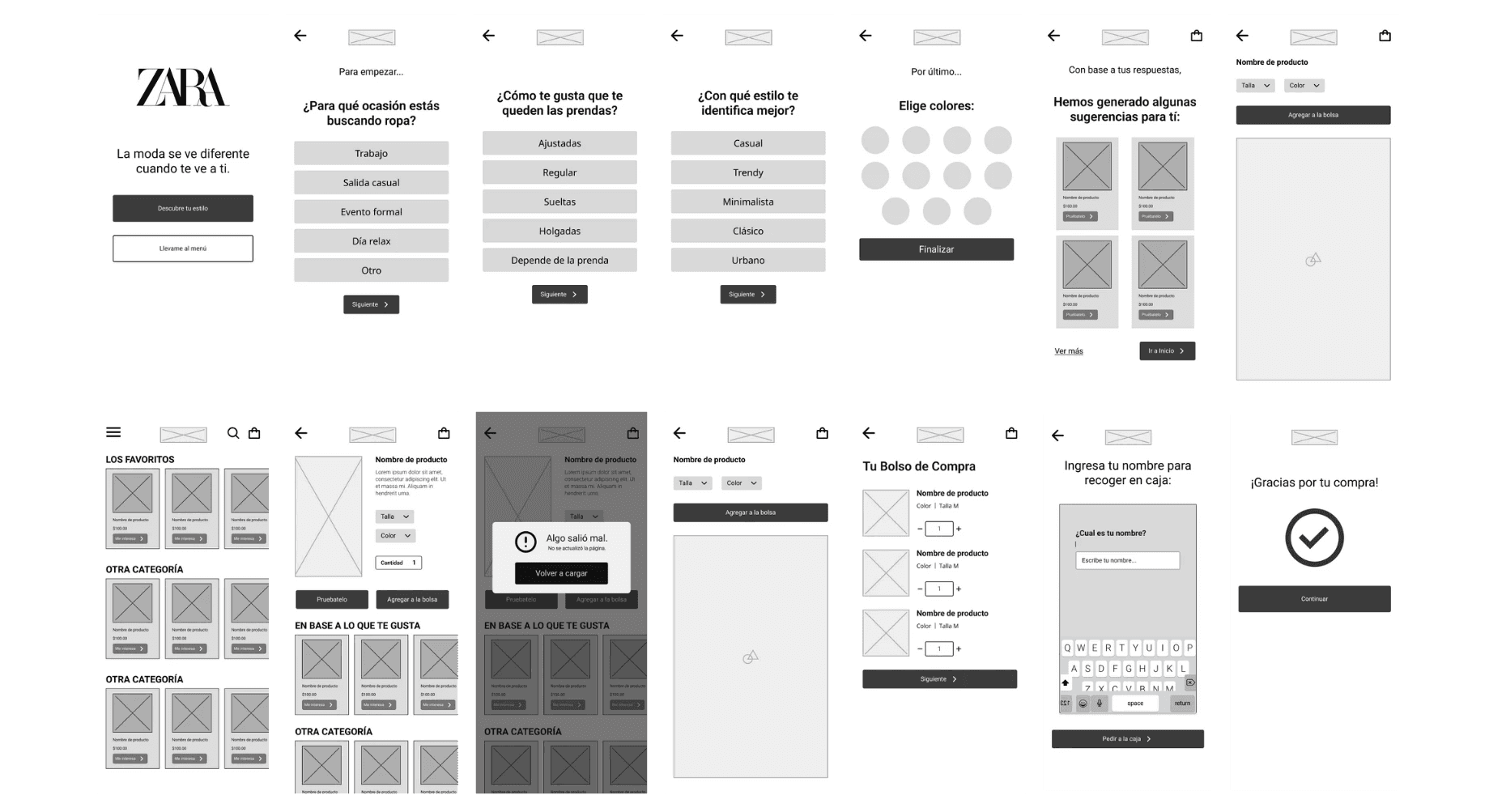
LOW / MID FIDELITY DESIGNS
LOW / MID FIDELITY DESIGNS
HIGH FIDELITY DESIGNS
HIGH FIDELITY DESIGNS
FIGMA FLOW INTERACTIVE PROTOTYPE
(still in progress)
FIGMA FLOW PROTOTYPE
FIGMA FLOW PROTOTYPE
FIGMA FLOW PROTOTYPE
REFLECTIONS & ROOM FOR IMPROVEMENTS
REFLECTIONS & ROOM FOR IMPROVEMENTS
REFLECTIONS & ROOM FOR IMPROVEMENTS
This project explored how physical and digital touchpoints can merge to support intuitive style discovery in retail. Designing a smart mirror pushed my focus beyond UI toward user guidance, decision-making, and emotional connection, reinforcing my interest in UX strategy and experience design.
Given the academic timeframe, future iterations would benefit from usability testing with real users to validate assumptions and refine flows. Further improvements could include deeper personalization, accessibility considerations, and expanded in-store scenarios to enhance scalability.
This project explored how physical and digital touchpoints can merge to support intuitive style discovery in retail. Designing a smart mirror pushed my focus beyond UI toward user guidance, decision-making, and emotional connection, reinforcing my interest in UX strategy and experience design.
Given the academic timeframe, future iterations would benefit from usability testing with real users to validate assumptions and refine flows. Further improvements could include deeper personalization, accessibility considerations, and expanded in-store scenarios to enhance scalability.
This project explored how physical and digital touchpoints can merge to support intuitive style discovery in retail. Designing a smart mirror pushed my focus beyond UI toward user guidance, decision-making, and emotional connection, reinforcing my interest in UX strategy and experience design.
Given the academic timeframe, future iterations would benefit from usability testing with real users to validate assumptions and refine flows. Further improvements could include deeper personalization, accessibility considerations, and expanded in-store scenarios to enhance scalability.
Katherin Villarreal Cavazos
© 2026 | Katherin Villarreal Cavazos




Katherin Villarreal Cavazos
© 2026 | Katherin Villarreal Cavazos
Katherin Villarreal Cavazos
© 2026 | Katherin Villarreal Cavazos
Katherin Villarreal Cavazos
© 2026 | Katherin Villarreal Cavazos